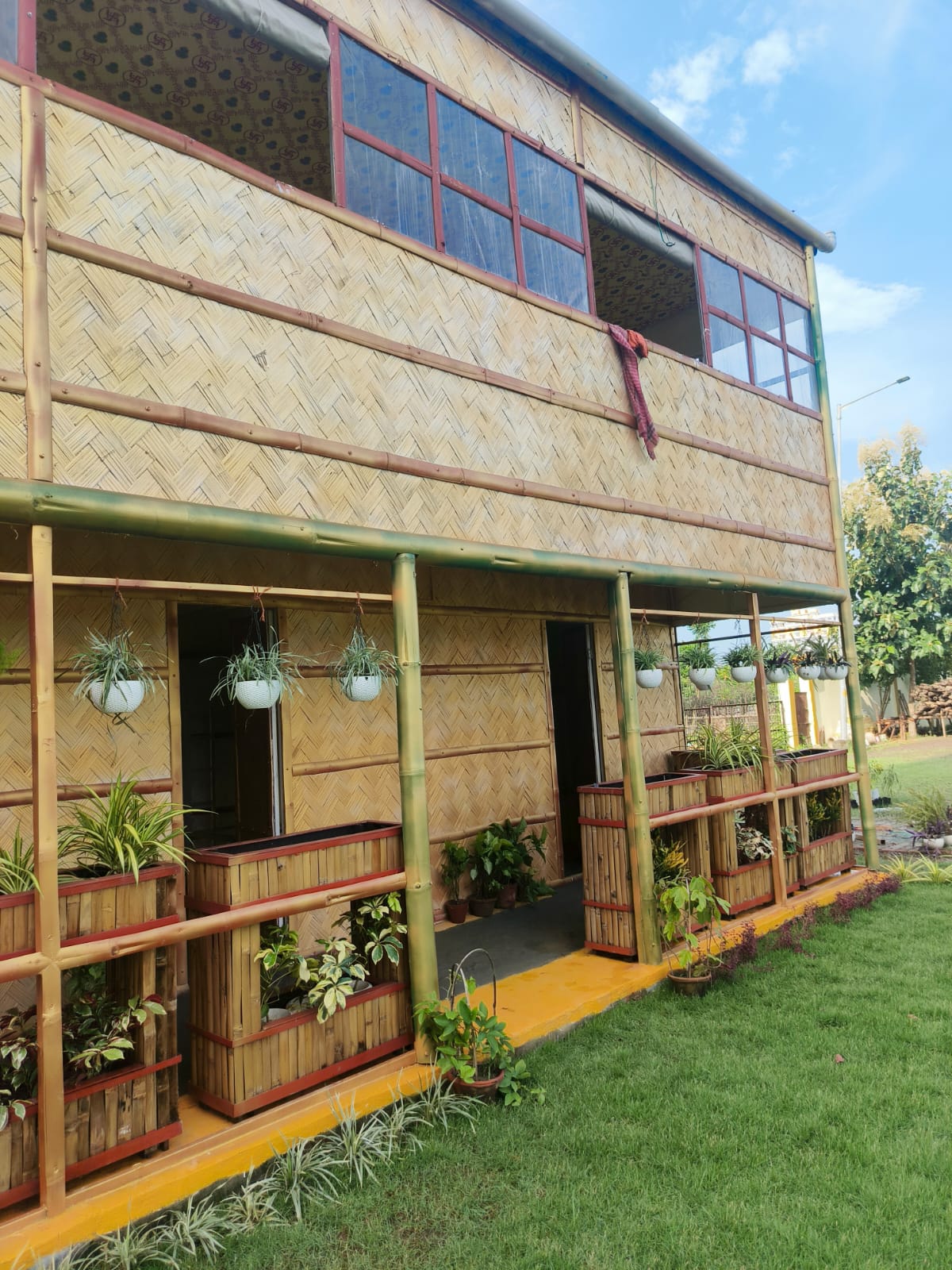
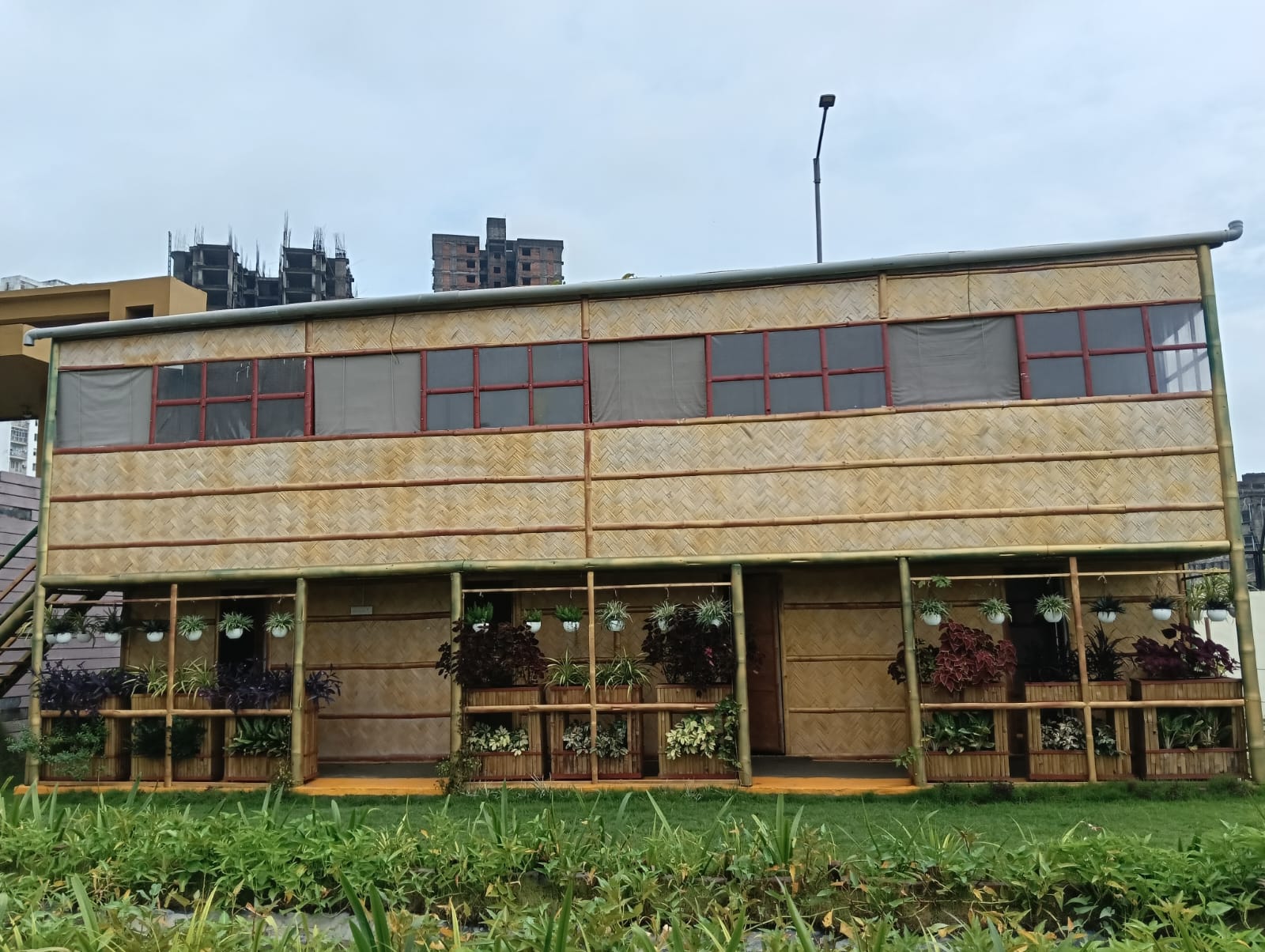
The Biophilic Habitat at IIT Kharagpur Research Park — a two-story bamboo structure with lotus pond and landscaped garden in the foreground

What if a building could breathe?

IIT Kharagpur Research Park, New Town, 2025. A biophilic, low-cost, prefabricated habitat — conceived by Mahacharya Sourabh J Sarkar as proof that shelter and nature need not be separate. Every wall woven from bamboo. Every facade a living garden.

The Philosophy

Beyond gardens. Into shelter.

For over a decade, KarmYog Vatika has transformed lawns, terraces, and facades into living biophilic spaces. But Mahacharya Sourabh J Sarkar’s vision was never limited to gardens on buildings. The question was always: what if the building itself were biophilic? What if the walls breathed, the structure grew from the land, and the cost stayed within reach of the people who need shelter most?

The Biophilic Habitat at IIT Kharagpur Research Park is that answer. A two-story prefabricated structure — dormitories, rooms, bio-toilets, bio-bathrooms — built on an iron framework and clad entirely in woven bamboo. Not a concept render. A building you can walk into, sleep in, and wake up surrounded by plants.

Research & development project at IIT Kharagpur Research Park, New Town, Kolkata. Completed September 2025.
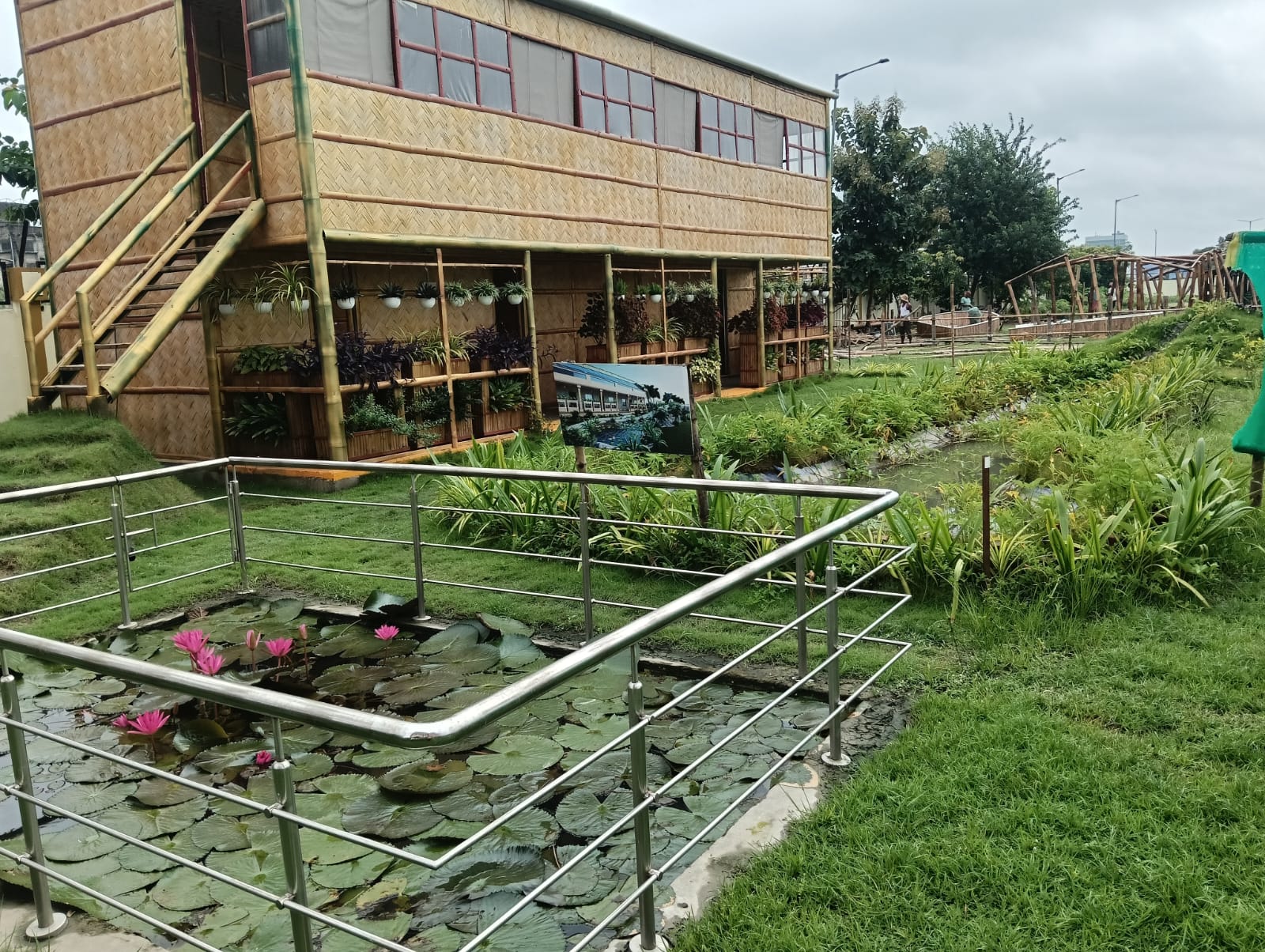

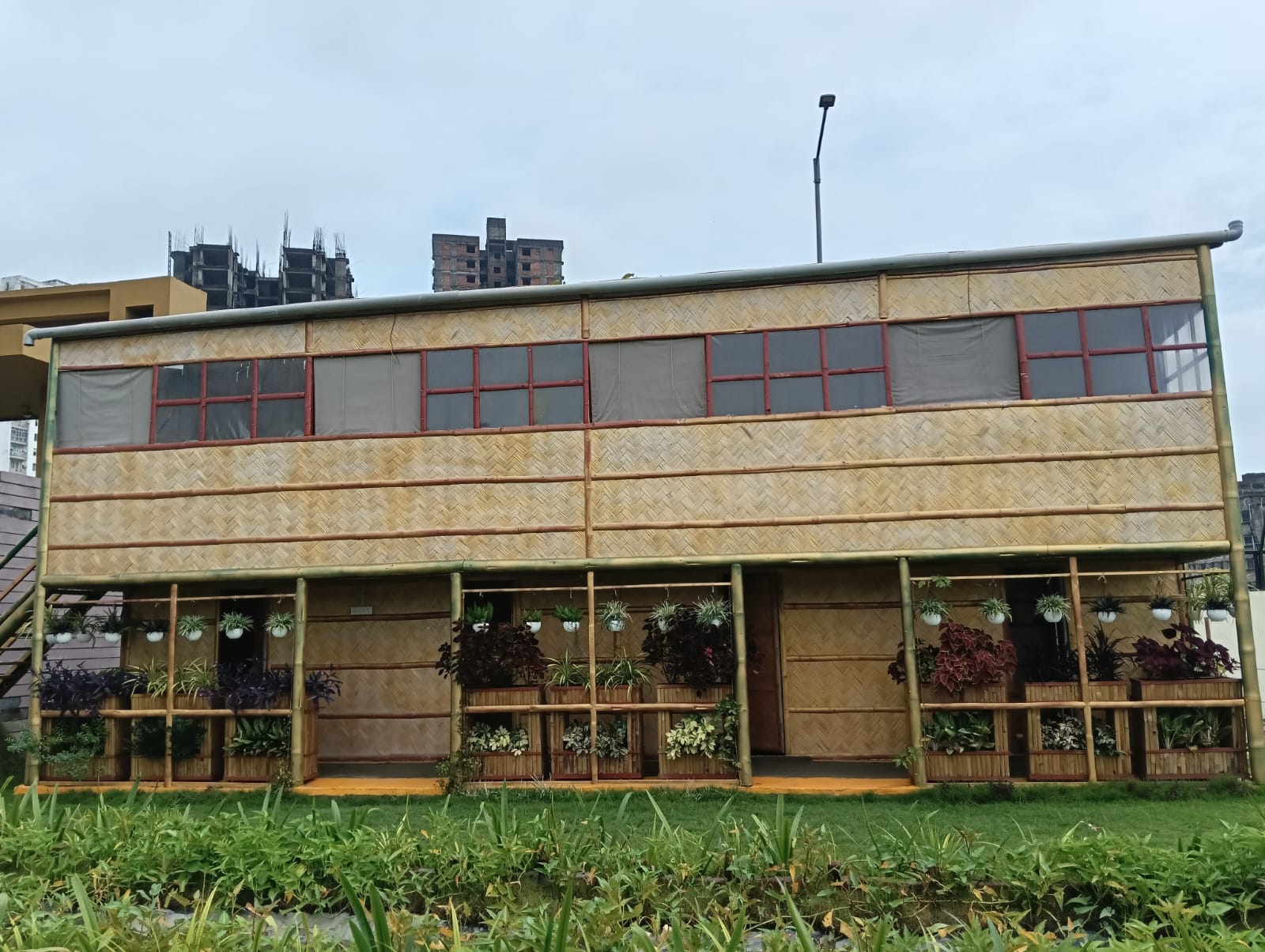
The completed Biophilic Habitat — full facade view showing woven bamboo walls, red window frames, and integrated planter system along the ground floor
The Making

From steel skeleton to living skin.

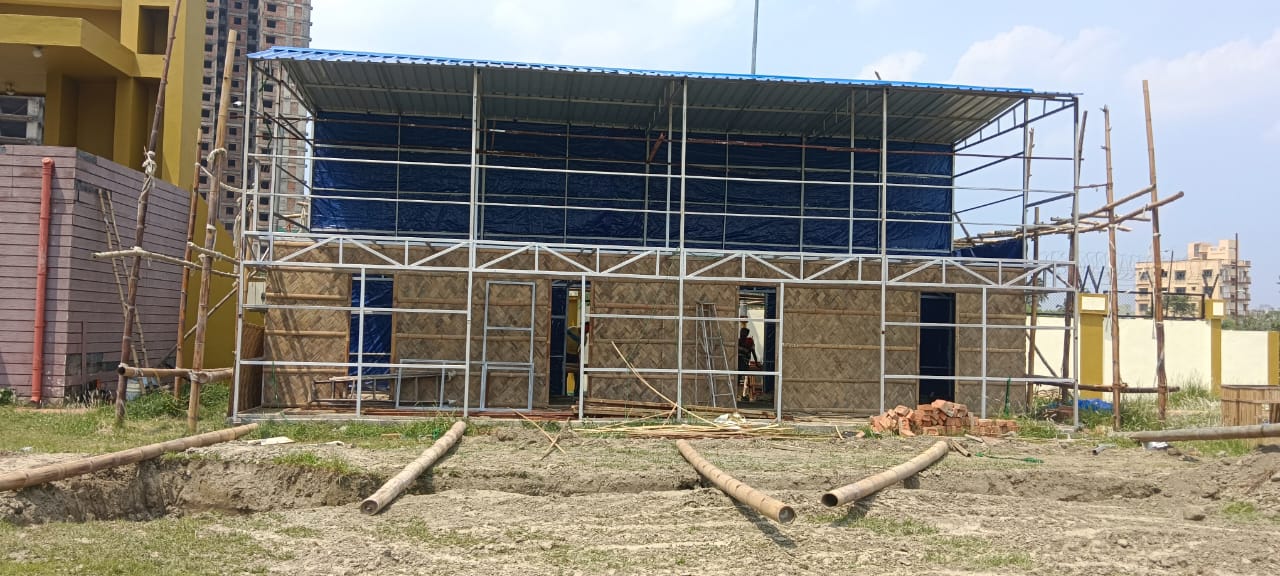
It began with an iron frame — a steel skeleton bolted to a concrete foundation. Then the karigars arrived. Woven bamboo panels were fitted to every surface, one by one, until the steel disappeared entirely behind a living skin of bamboo and plants.

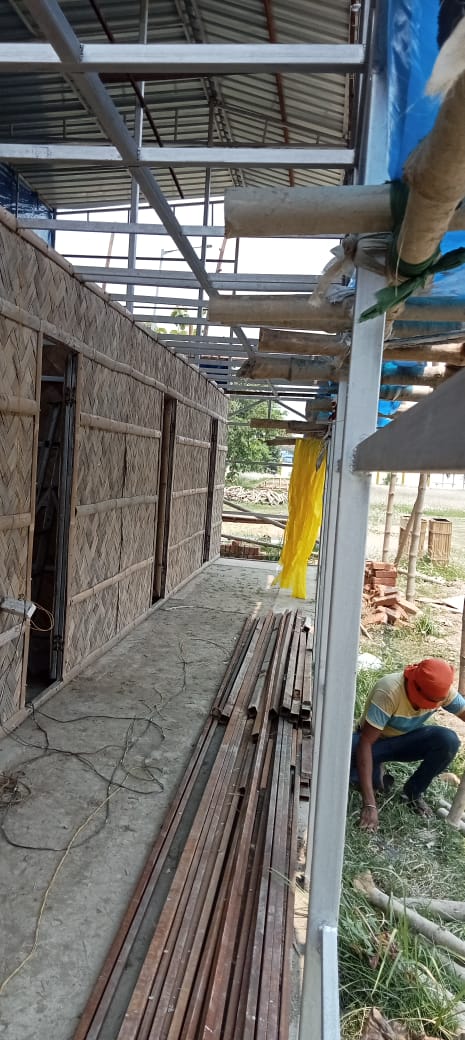
The bare steel framework with blue tarp roof, bamboo poles on the ground, woven panels beginning on the ground floor

The steel skeleton. Phase 2 complete.

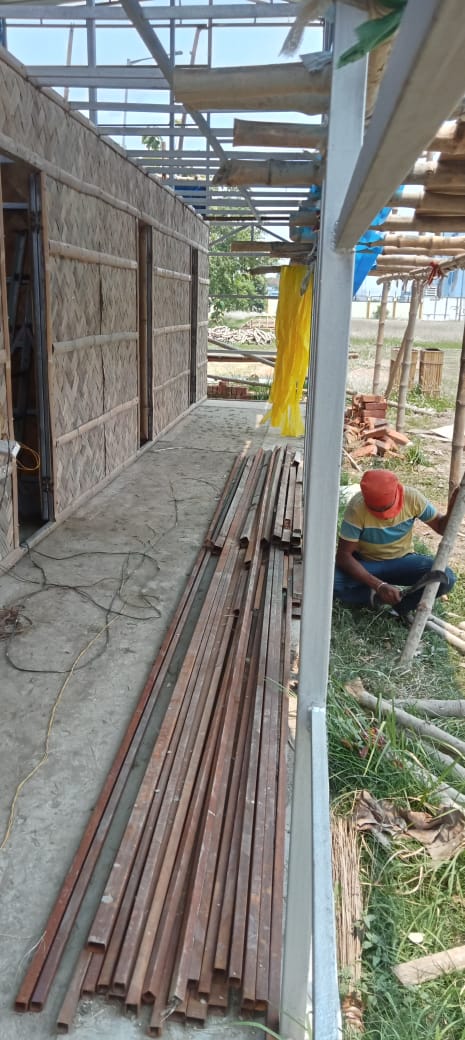
A karigar working on the veranda, iron beams stacked alongside, woven bamboo walls going up behind

Karigars fitting iron beams and bamboo, side by side.

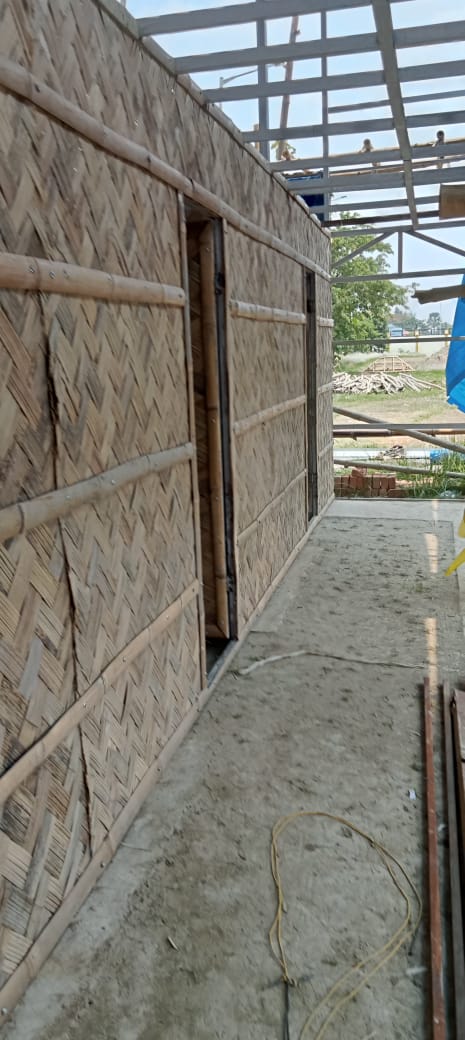
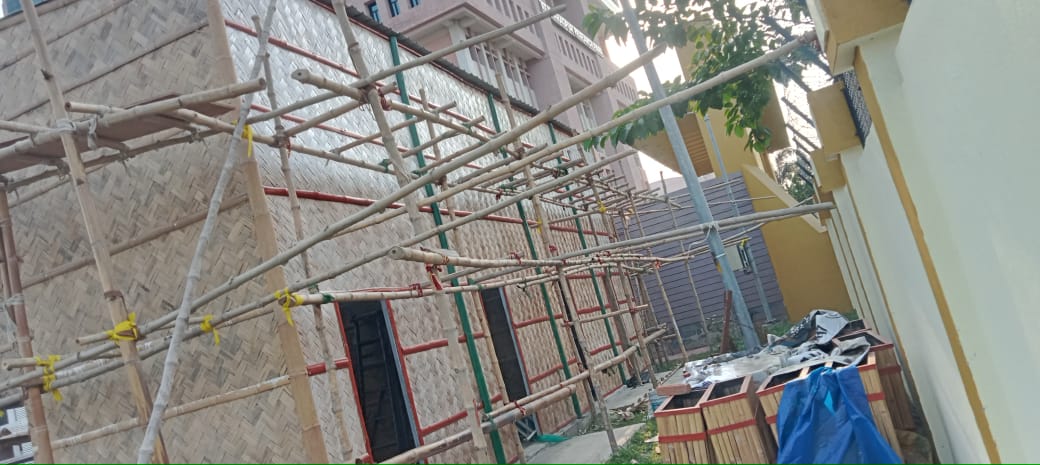
Close-up of hand-woven bamboo panels in herringbone pattern, fitted to the steel frame with bamboo battens

Every wall panel woven by hand. Herringbone bamboo.

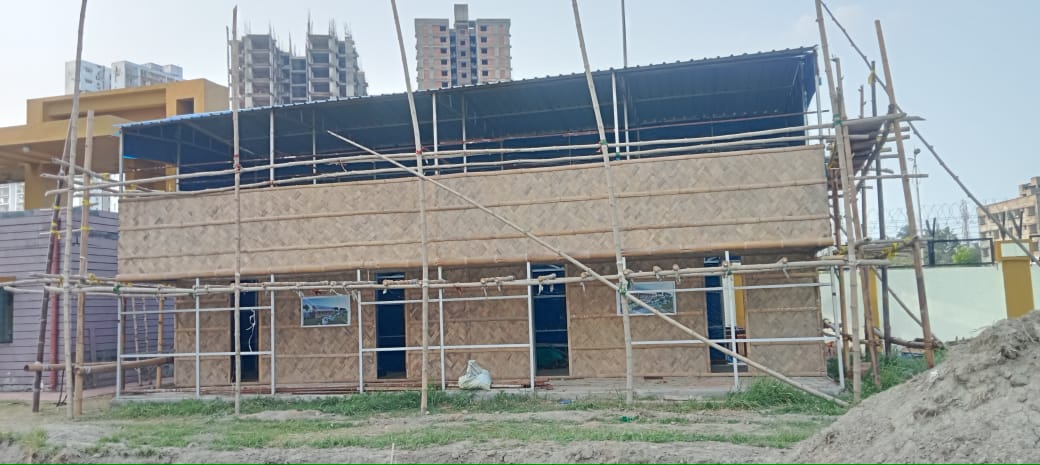
Upper floor steel frame still exposed while ground floor bamboo cladding nears completion, worker visible

Ground floor clad. Upper floor still open.

Bamboo scaffolding around the building, woven panels installed on both floors, red window frames visible

Scaffolding up. Both floors taking shape.

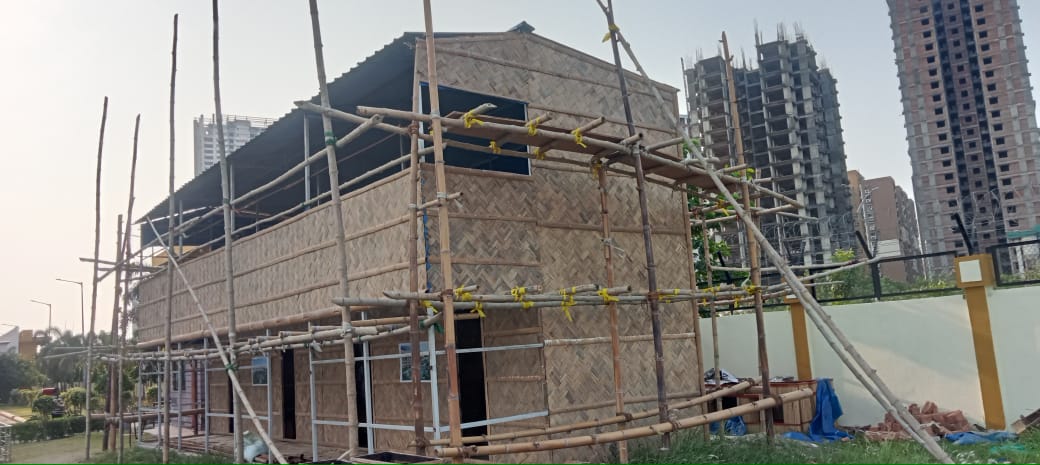
Corner view of the nearly complete habitat wrapped in scaffolding, New Town high-rises in the background

Nearly complete. The New Town skyline behind.

The Transformation

From scaffold to shelter

The habitat mid-construction — scaffolding surrounds the two-story structure, woven panels on both floors, bare ground

During construction.

The completed habitat — scaffolding gone, planters installed, landscaped garden with green lawn

Completed. September 2025.

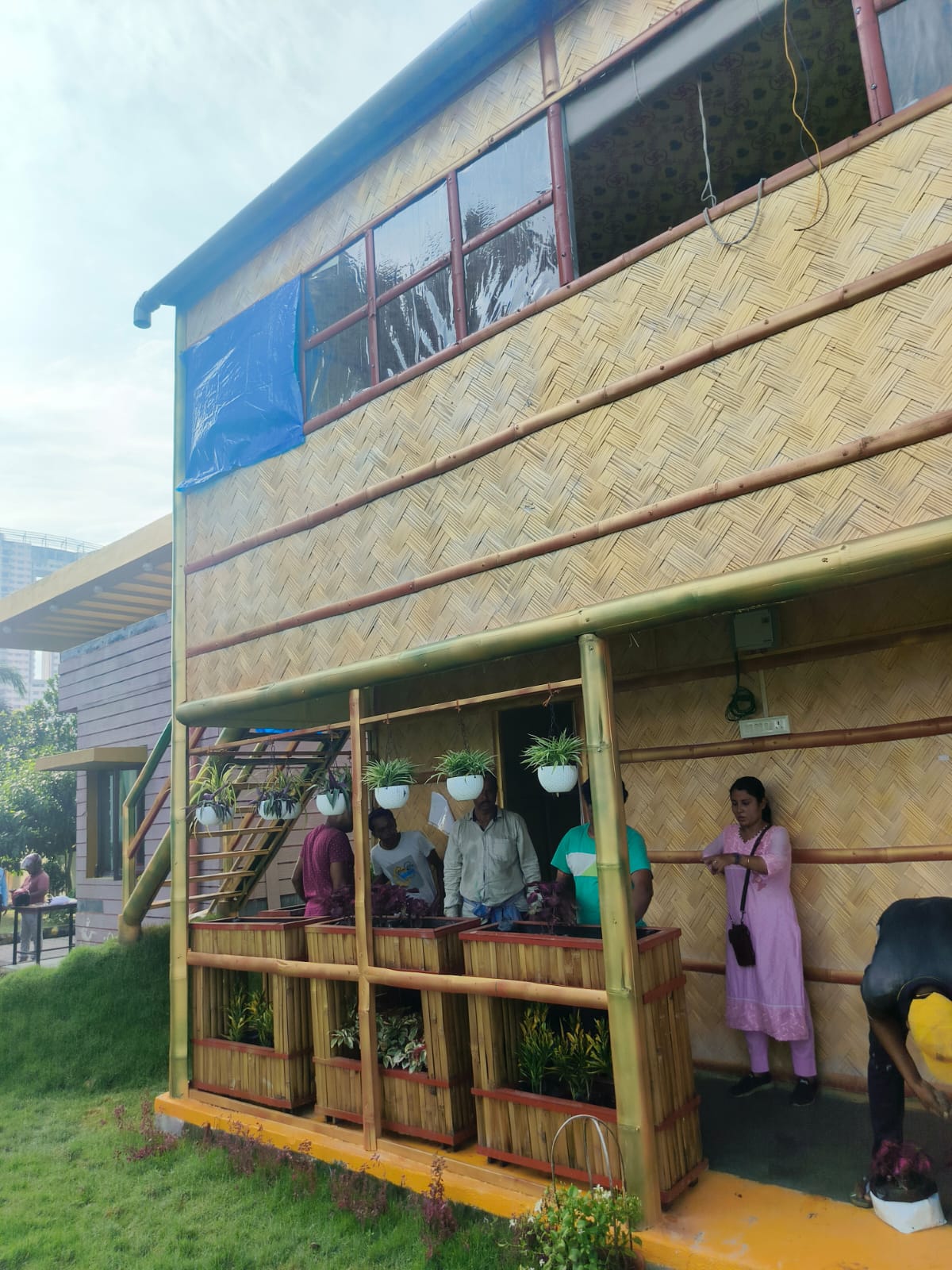
Corner view showing visitors exploring the ground floor, bamboo ladder staircase to the upper level

Two stories. Prefabricated bamboo on iron frame.

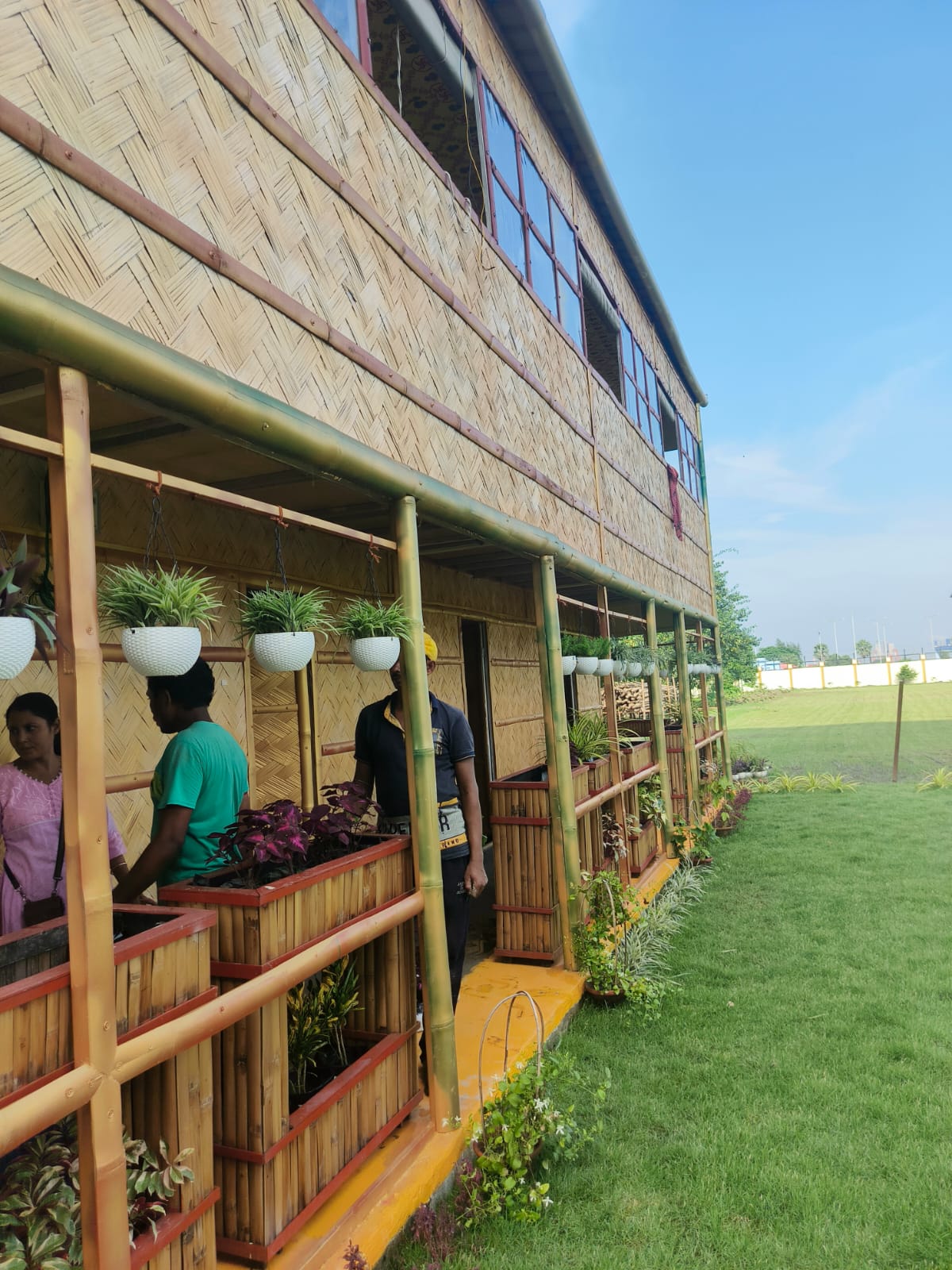
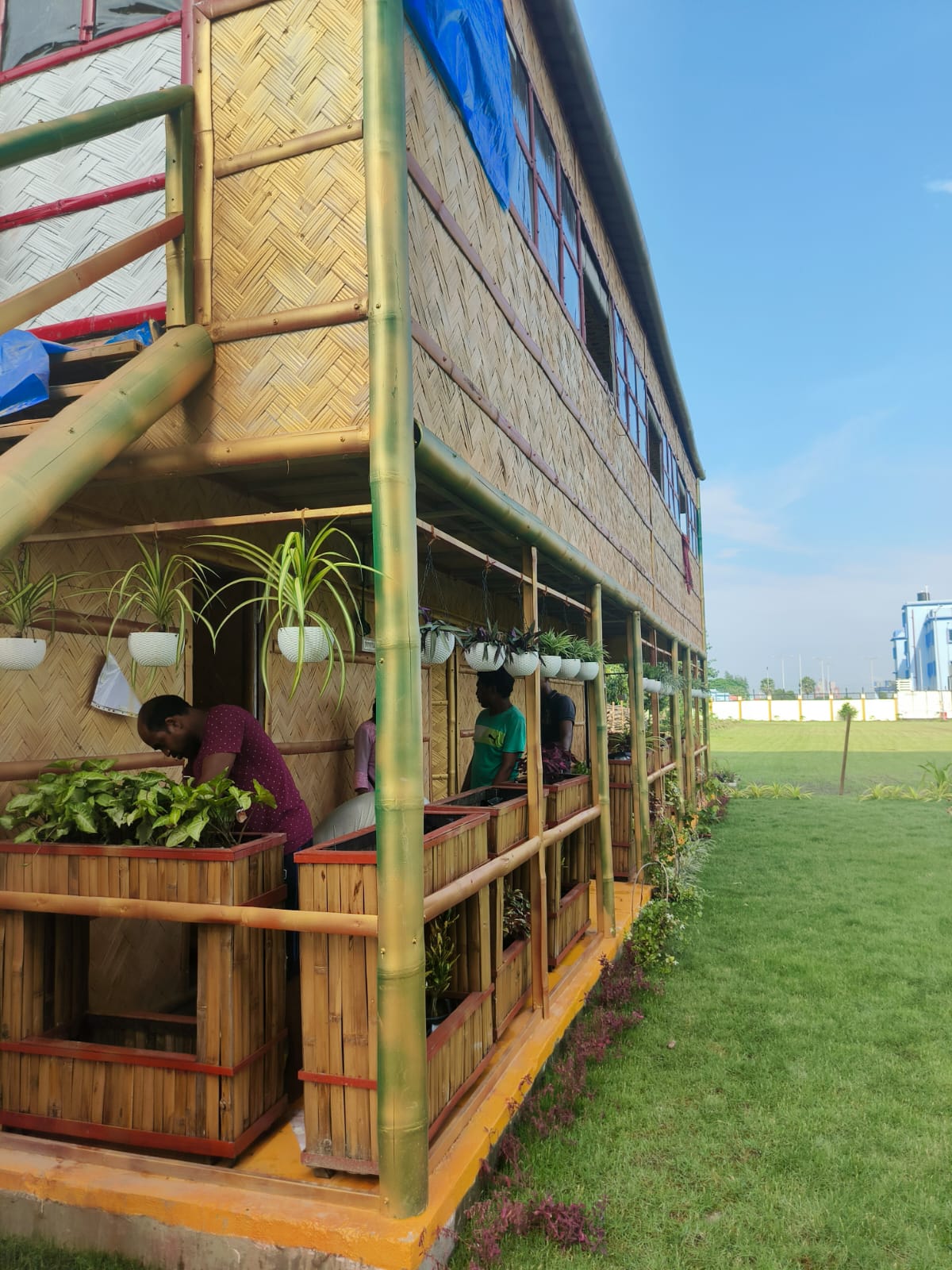
Side view with people working inside, hanging planters along the full facade

Dormitories, rooms, bio-toilets. Built to be lived in.

This is not a pavilion or an exhibition piece. It is a working prototype for low-cost biophilic accommodation — two dormitories with six bunk beds each, four private rooms, a bio-bathroom complex, and integrated bio-toilets. The structure sits on a steel framework clad entirely in prefabricated bamboo modules. Each wall panel is woven, each planter is built in, each window framed by hand.

Front facade of the Biophilic Habitat with the New Town skyline behind, planter boxes lining the full length
The Living Palette

Built from the land it sits on

Every surface of the habitat is a natural material, chosen for strength, insulation, and beauty. No concrete walls. No plaster. The building is its own garden.

Side view showing thick Ganga Bamboo structural poles supporting two stories, with woven bamboo panels and integrated planter boxes

Structural Bamboo

Thick Ganga Bamboo poles form the visible skeleton — columns, rails, and planter frames. Lashed and fitted to an iron subframe, they carry two full stories while remaining light enough to prefabricate off-site.

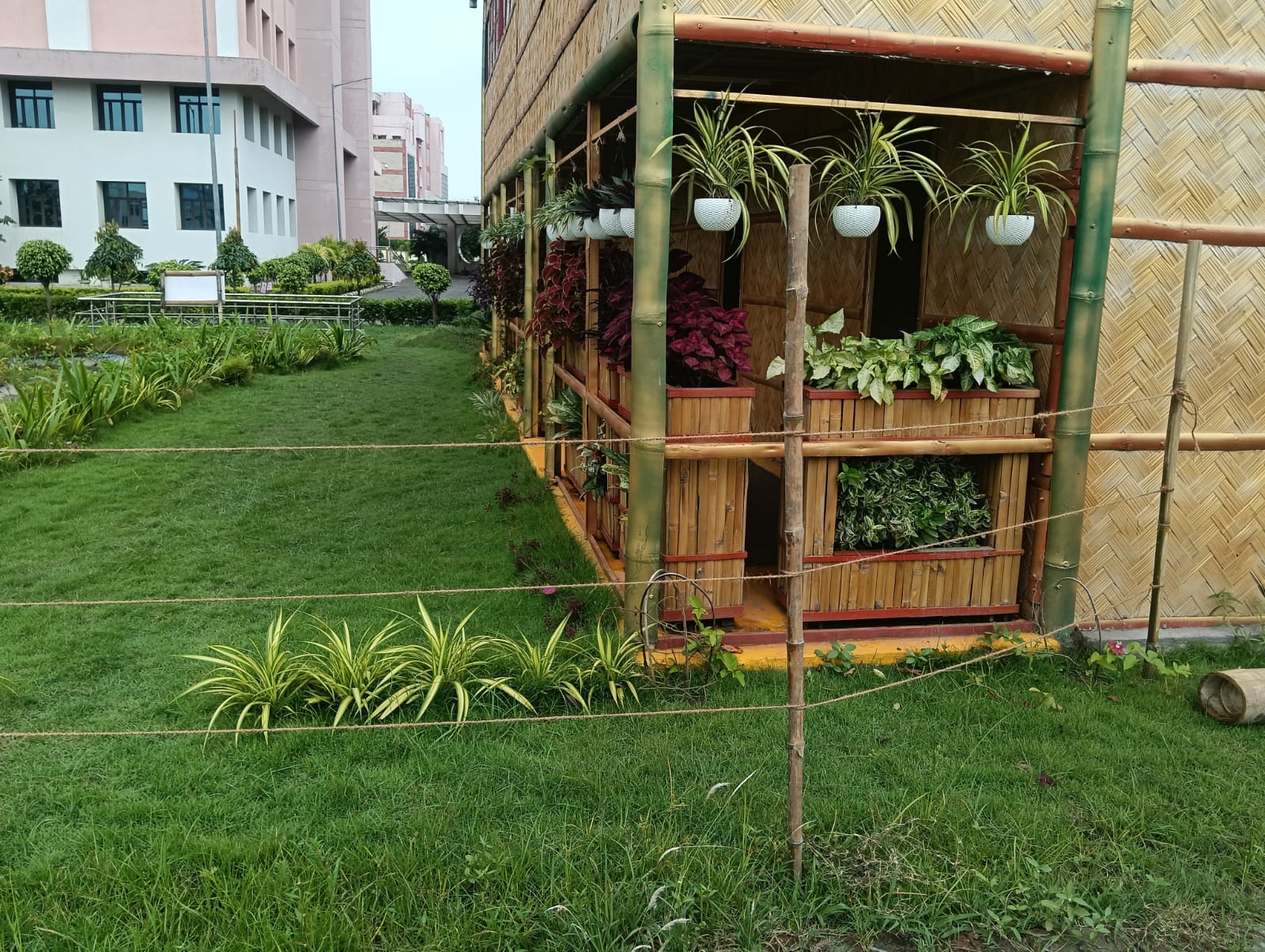
Corner view of the integrated planter system — tiered bamboo boxes and hanging white planters running along the facade

Woven Bamboo Panels

Every wall is a hand-woven herringbone bamboo mat panel. Assam Bamboo, split fine and woven tight — naturally insulating, breathable, and far lighter than brick or concrete. The skin of the building.

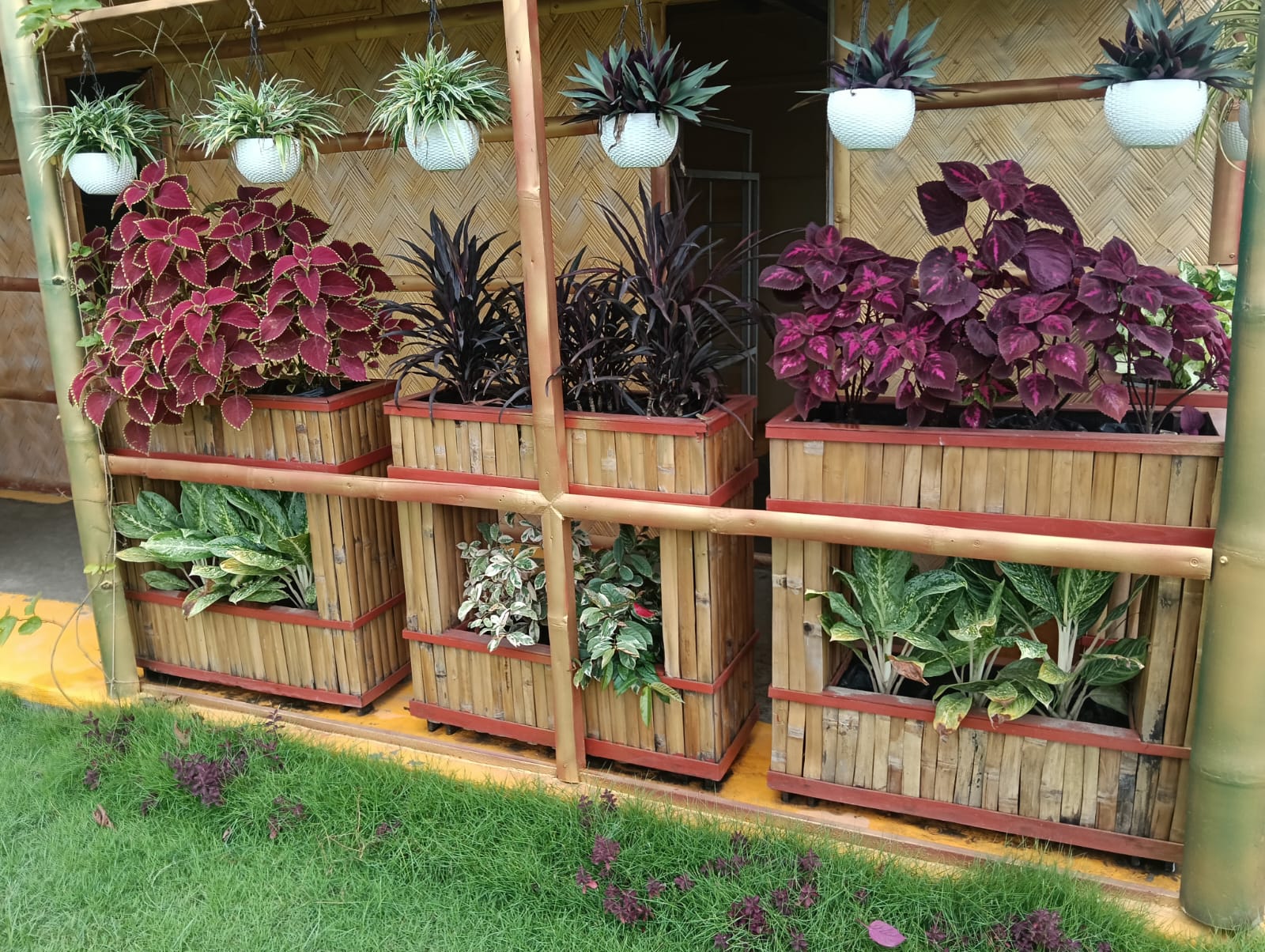
Close-up of the integrated planter system — coleus in deep reds and purples, ornamental foliage in bamboo planter boxes with hanging planters above

Integrated Living Walls

Tiered bamboo planter boxes and hanging white bowls run the full length of every facade. Coleus, spider plants, ferns, and ornamentals turn the building envelope into a vertical garden. Not decoration — part of the structure.

Begin

A habitat of your own

If you have a campus, a research park, a school, a farmstead, or simply a piece of land — we can build you a biophilic habitat. Prefabricated, low-cost, and rooted in a decade of work by Mahacharya Sourabh J Sarkar and the artisans of KarmYog Vatika. Write to us, and we’ll come look at your ground.

Begin your Habitat